Exit 214: A Defense of the Towns America Drives Past at Sixty-Five Miles an Hour
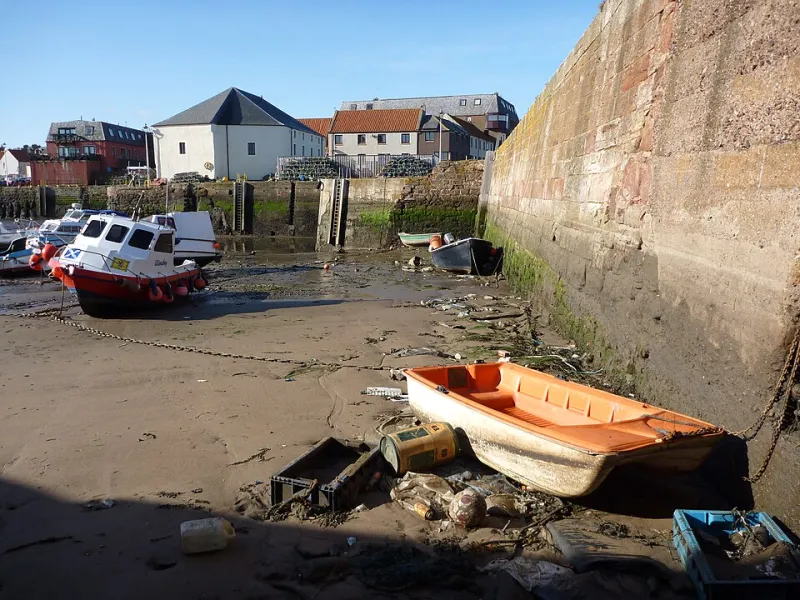
Photo: Photograph by Mike Peel (www.mikepeel.net)., CC BY-SA 4.0, via Wikimedia Commons
Exit 214 had nothing to recommend it. I want to start there, because everything that follows happened despite that fact, not because of it.
I'd driven past it a dozen times — the stretch of interstate between the city and my mother's place, four hours of corn and billboards for personal injury lawyers. Exit 214 announced itself with a green sign and a water tower visible from the highway, the town's name half worn off by weather. There was no chain restaurant at the ramp. No truck stop with a gift shop. Just a two-lane road bending toward a cluster of rooftops, and a gas station whose sign read OPEN in letters that flickered at a frequency you could feel in your teeth.
I'd been driving for three hours and lying to myself about needing gas. I took the exit.
The Diner Test
Every skipped exit has a diner, and every diner has a test: order the special, and see what happens. At the place beside the gas station — a name I'll leave out, because the town has had enough of being a punchline — the special was a hot roast beef sandwich that arrived with the gravy already migrating toward the peas. The waitress called everyone hon and meant it democratically.
The room held eleven people at 2 p.m. on a Tuesday. A table of men in work jackets argued about a grain price with the intensity other men reserve for football. Two women shared a piece of pie and a piece of news. The radio played classic rock at a volume that suggested the diner had stopped noticing the radio decades ago.
You cannot get this at an exit with a chain restaurant. I say that as someone who has eaten approximately four hundred breakfasts at highway chains, and liked several of them. The chains are comfortable because they erase the distance between exits — every ramp the same, the country dissolved into a beige continuum. The diner at Exit 214 does the reverse. It insists on the distance. It says: you are 214 exits from wherever you started, and nowhere else is exactly like here.
What the Water Tower Knows
After lunch I did the thing you're supposed to do in a town you'll never return to: I drove toward the water tower, which is how you find the center of any small American town. The tower's faded letters turned out to be the town's name, and beneath it, painted more recently: Home of the 1994 Regional Champions. No sport specified. I found that perfect.
There was a monument on the courthouse lawn — the wars, the names, the usual marble arithmetic. There was a hardware store with a cat in the window who did not open her eyes for me. There was a motel, the kind with exterior doors and a sign that promised COLOR TV, a promise so old it had come back around to charm. There was a church, a bar, a bar that used to be a church. I am not being cute. The second bar had a rose window.
And here is what struck me, walking a four-block radius in twenty minutes: nothing here was performing anything. No mural commissioned by a tourism board. No historic district with plaques. The town was not trying to be seen, which is precisely why it was worth seeing. The rawest version of the American story isn't in the places that tell it well. It's in the places too busy living it to narrate.
The Case for the Exit Ramp
We treat drive-through towns as scenery, the way we treat the sky — something between us and the destination. But the interstate is a national autobiography, and every exit is a sentence we skip. The gas station diner, the roadside monument to a lumber baron nobody remembers, the grain elevator standing against the horizon like a cathedral that converted to industry — these are not interruptions of the American story. They are the American story, unedited, at sixty-five miles an hour.
I'm not romanticizing it. The town at Exit 214 is losing population the way towns like it have lost population for seventy years. The diner's owner told me her son moved to the city and she didn't blame him. Beauty and decline can share a booth; they often do out here.
But I filled my tank — I did, actually, eventually, since I'd lied about it — and bought a bad coffee for the road, and got back on the interstate going the way I'd been going. Behind me the water tower shrank and the flickering OPEN sign kept flickering for whoever came next.
Somewhere out there is an exit you always skip. You know the one. You've passed it so many times it's become furniture. Next trip, take it. Order the special. Let a stranger call you hon. The destination will still be there. The exit, as the sign doesn't quite promise, is now.