The Shoebox at the Back of the Closet: On Photographs That Won't Tell You Everything
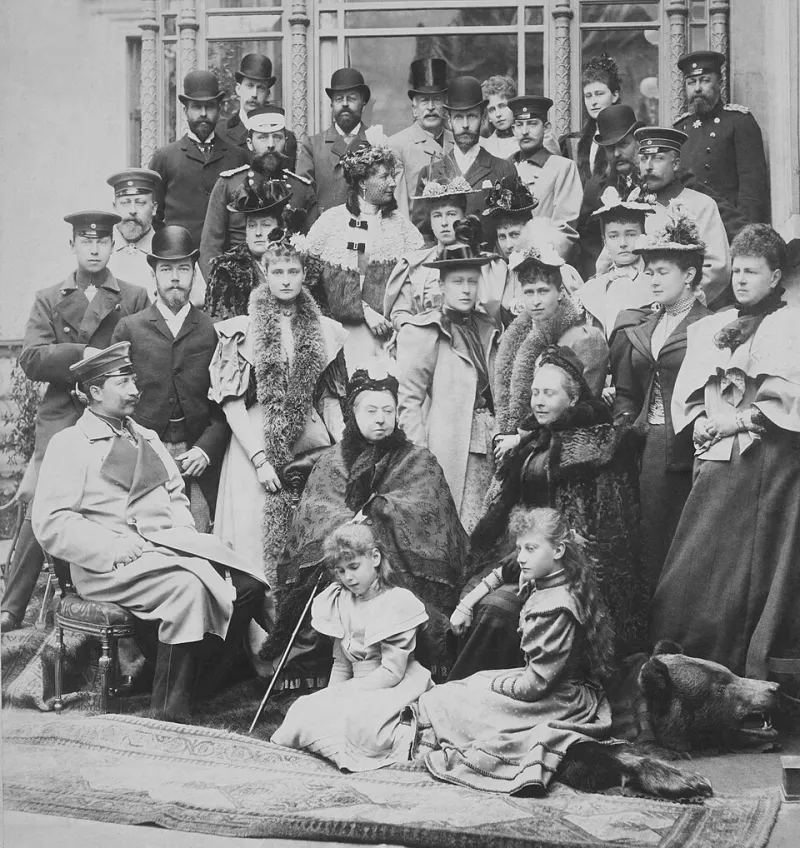
Photo: Eduard Uhlenhuth, Public domain, via Wikimedia Commons
There's a shoebox in my mother's closet in Ohio that I have opened maybe four times in my adult life. Each time feels a little like breaking into a house I used to live in. The lid gives that soft cardboard sigh. Inside: decades, layered.
The last time I opened it was in January, during a visit that had no particular reason to become an excavation. My mother was downstairs on the phone with my aunt, their laughter rising through the floorboards in that way family laughter does — half joke, half argument. I sat cross-legged on the carpet and went through other people's Saturdays.
The Archive and the Altar
Here's what I kept noticing: every photograph in that box was doing two jobs at once. It was a record — proof that a barbecue happened, that a station wagon existed, that someone once owned a shirt with that many stripes. And it was also an offering. Somebody chose to print this. Somebody chose to keep it through four moves, two divorces, and the great American garage sale that swallows most family evidence.
We talk about photos like they're archives, but they behave more like altars. You don't archive a person because you miss the facts about them. You keep the picture because the picture is where you put the feeling when you had nowhere else to set it down.
And altars, unlike archives, don't come with footnotes.
Nobody Wrote Down Who That Was
The box's most frustrating resident is a photograph of five people on a dock, somewhere with water the color of brushed tin. I know one of them is my grandfather, because of the shoulders — I'd recognize those shoulders anywhere, hunched forward like he's about to fix something. The other four are strangers wearing my family's smile.
I brought it downstairs. My mother squinted. My aunt, over speakerphone, offered three conflicting theories, one of which involved a person who, as far as anyone could tell, did not exist. We laughed about it. But afterward I kept thinking: this is how it goes. The image survives. The caption doesn't. We inherit faces without their names the way you might inherit a locked trunk with the key long since vacuumed up.
There's a version of this that's sad, and there's a version that's almost merciful. The photo can't tell me who they were, which means they get to remain slightly larger than my understanding of them. Some of my ancestors exist for me only as a dock, a lake, a good day. Maybe that's the most honest biography a photograph can write.
In Praise of the Bad Photo
The sharp pictures in the box are, honestly, the boring ones. The studio portrait of my grandmother — crisp, formal, everyone's eyes open — tells me what she looked like the day she decided to look like that.
The photograph I can't stop looking at is a wreck. Thumb in the corner, horizon tilted, motion smear across half the frame where someone's cousin ran through the shot. But the smear is doing something the sharp photos can't: it's showing me the photographer. Someone was laughing so hard they couldn't hold the camera still. The blur is a fingerprint of joy.
We've spent the last twenty years engineering imperfection out of our pictures. Phones now take eleven frames and hand you the one where everyone's eyes are open, everyone's teeth are white, the sky is artificially generous. These are lovely images and they are, in a way, all the same image. What they lose is the accident — the dropped thumb, the cousin photobombing, the light that came out weird and turned the whole kitchen gold.
The grain is where the life leaked in.
What Fades, What Stays
The chemistry of an old print is its own quiet drama. The colors in that box have shifted the way colors do when a thing sits with itself long enough — the blues have gone toward teal, the reds have mellowed into something closer to brick. Photographs fade unevenly. Some inks give up first. Others hold on like they've decided the picture isn't done.
People fade unevenly too, when they leave. Certain memories burn off early — what someone's voice sounded like on a Tuesday. Other things hold on inexplicably: the specific creak of a screen door, the way a hand felt, heavier than you expected, when you shook it for the last time.
I didn't take the shoebox home with me. I thought about it — scanning everything, backing it all up to the cloud, giving the archive its clean, durable afterlife. Maybe I will someday. But it felt wrong to interrupt them mid-conversation. Those photos have been talking to each other in the dark for thirty years, and I'm just the relative who visits.
Leave the Lid Loose
If there's a lesson in the box, it's this: keep your pictures, but don't over-curate them. Write the names on the back, yes — do it today, for whoever opens your box in 2085. But also let some things stay unresolved. Keep the bad photo. Keep the one where you can't tell who's who. Future you doesn't need a complete file. Future you needs a door that still opens.
Before I flew home, I put the dock photograph somewhere my mother would find it, propped against the kitchen salt shaker. No note. Let her wonder a while. Some stories drift into the light on their own schedule — and the ones that never quite surface are still doing their work, quietly, in the dark of the closet, keeping the feeling warm even after the facts have gone.