The Dial Was a Door: Remembering When Music Had to Be Found
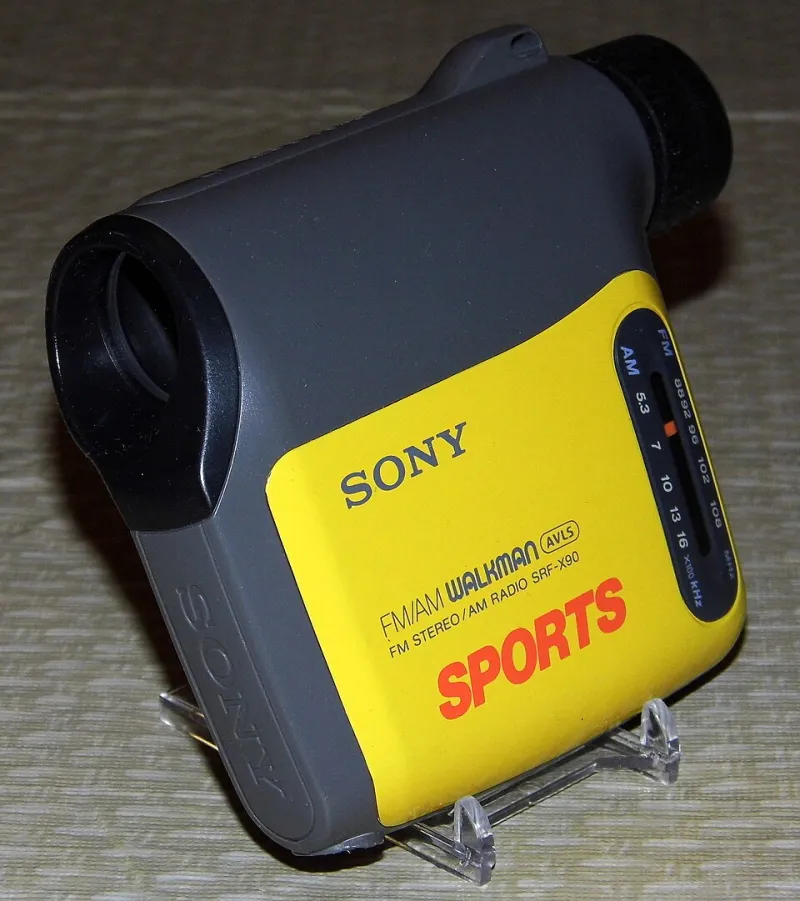
Photo: Joe Haupt from USA, CC BY-SA 2.0, via Wikimedia Commons
There's a specific kind of silence that lives inside old radios. Not the silence of nothing, but the silence of almost — the hiss between stations, the breath a signal takes before it finds you. I grew up in a house where the kitchen radio never turned off, just wandered. My mother would twist the dial a few degrees at a time, the way you'd lean toward a conversation at a party, waiting for something worth staying for.
I've been thinking about that dial a lot lately. Not the music itself — I can summon any song ever recorded in under two seconds now, which is its own kind of miracle — but the looking. The slow sweep of a finger across frequencies. The way you had to commit to a station before you knew if it was good.
The Physics of Not Knowing
Here's what nobody says about streaming: it's perfect, and that's the problem. The algorithm knows me better than my journal does. It hands me songs I already love, artists I already follow, moods I've already named. There is no friction. There is no moment where the signal fades and you have to decide — do I keep listening to this half-heard thing, or do I keep searching?
The AM/FM dial was friction made physical. You'd catch a song already in its final chorus and have to wait, sometimes days, for the station to play it again. If you missed the DJ saying the title, you might never know what it was. The song would just live in you, unnamed, like a face you recognize from a bus window.
I once spent an entire summer of 1990s Ohio car rides chasing a song I'd heard for eleven seconds while parked outside a Dairy Queen. I never found it. I still think about it. Try explaining that to a teenager with a search bar.
Chance Was the Curriculum
The dial taught a kind of literacy we don't have a name for anymore. Because you couldn't skip, you heard things you'd never choose. Polka hour on the AM side out of Youngstown. A fire-and-brimstone broadcast that bled into the country station at midnight. The time my father and I sat in a parked Buick for forty minutes listening to a ball game we had no stake in, because the signal was the only thing clear on that stretch of Route 20.
Those weren't wasted minutes. They were the curriculum. Sitting with a song you didn't like taught tolerance. Sitting with static taught patience. Sitting with the unknown — the possibility that something extraordinary might surface two clicks up the dial — taught a kind of hope that's hard to manufacture on demand.
Chance encounters were the whole point. The radio was a stranger's carpool. You shared a signal with a farmer two counties over, a night-shift nurse, a kid in a basement apartment. You'd never meet them, but you were hearing the same crackle, the same weather warnings, the same late-night dedications. The dial was a commons, and commons don't scale.
Precision Is a Kind of Poverty
I want to be fair to the present. I love that a kid in rural Montana can hear Ghanaian highlife or Philly soul or a field recording from Appalachia with a swipe. The gatekeeping that the dial enforced — the DJs, the coverage maps, the tower ranges — kept a lot of voices out. I don't romanticize that.
But something got lost in the upgrade, and I think it's this: the dial required surrender. You couldn't control it, so you listened differently. You leaned in. Your attention had to do the work that the machine now does for you. Streaming gives us infinite choice and, somehow, less choice — because every option has already been sorted, ranked, predicted. The algorithm doesn't offer you the unknown. It offers you a mirror with good taste.
The dial offered you static. And static, it turns out, was the honest part. It was the sound of the world saying: I don't owe you a signal. Come find me.
What We Do With the Hole
I'm not going to tell you to buy a vintage radio, though my uncle keeps one humming in his garage in Toledo and there are worse ways to spend a Saturday. The point isn't the hardware. The point is the posture — the willingness to be a seeker rather than a receiver.
Maybe the practice looks like this: letting a song play past the first ten seconds. Taking the long way and listening to whatever the presets offer. Letting a playlist run in order, like an album, like someone else made a decision for you and you agreed to trust it. Small acts of surrender in a life engineered for control.
Stories drift into the light the same way signals did — sideways, faintly, when we're tuned to something we didn't choose. My mother's kitchen radio is long gone, but I still catch myself turning an invisible dial some evenings, sweeping through frequencies that no longer exist, listening for the hiss that meant anything could happen next.
The static was never noise. It was the sound of possibility, waiting to resolve.